







You've trained hard, and now you can feel it. Stairs feel insurmountable, it hurts to sit down, and even lifting your arms overhead requires extra effort. Sore muscles after training are one of the most common experiences for anyone who trains, regardless of level. It is not dangerous, it will pass, and it is not necessarily a sign that you did something wrong. But it raises two questions most people want answers to. What can I do about it, and when can I train again.
Why muscles become sore after training
Muscle soreness after training is not caused by lactic acid. That is a widespread misconception. Lactic acid leaves the muscles within an hour after training and plays no role in the soreness you feel the next day.
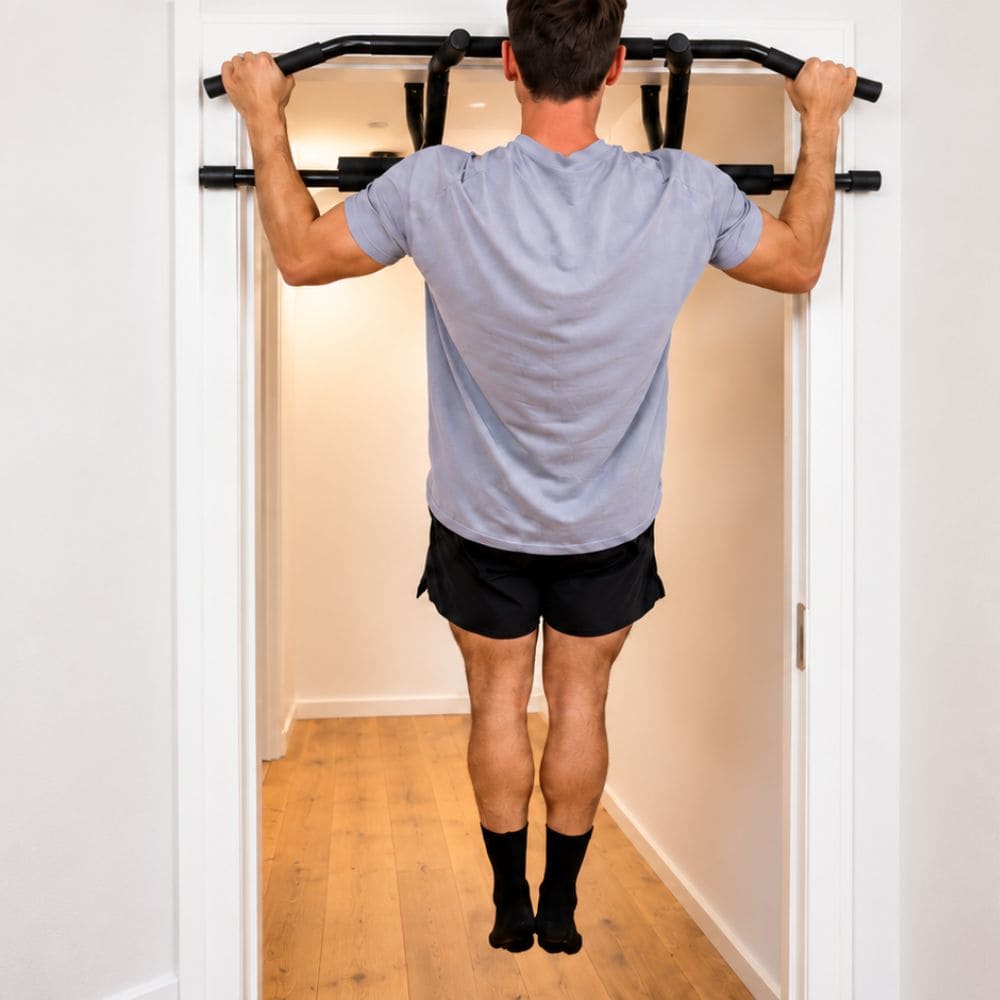
What actually happens is called DOMS, delayed onset muscle soreness. When you load the muscles, especially in the eccentric phase (the part of the movement where the muscle lengthens under load, such as when you lower into a squat or lower yourself from a pull-up), microscopic damage occurs in the muscle fibers. The body responds with an inflammatory repair process, and it is that process you feel as soreness, stiffness, and tightness.
The soreness typically peaks 24 to 72 hours after training. Having sore muscles several days after training is normal, especially with new or unfamiliar loading. This applies even if you have been training for years. A new exercise, a new angle, or an unfamiliar volume can trigger it.
DOMS is the body's repair mechanism. It rebuilds the muscles stronger than they were before. But soreness is not a measure of the quality of your training. Not being sore after a workout does not mean it was ineffective, and being very sore does not mean you got more out of it.
What helps with recovery
Recovery after training is about supporting the body's own restoration, not about eliminating soreness with a trick.
Active recovery is the most documented. Light movement such as walking, low-intensity cycling, or light stretching increases blood flow to the sore muscles and can reduce the duration of the soreness. It is not the same as training hard again, but it is also not lying still.
Sleep is the most underrated recovery tool. Most of the body's muscle tissue repair happens during deep sleep. Nutrition also plays a role. Sufficient protein supports rebuilding, and hydration affects the muscles' ability to recover. Magnesium is often mentioned in connection with sore muscles, but the evidence that supplementation reduces DOMS is mixed. If you already have an adequate intake, extra magnesium probably makes no difference.
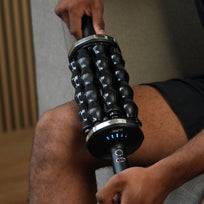
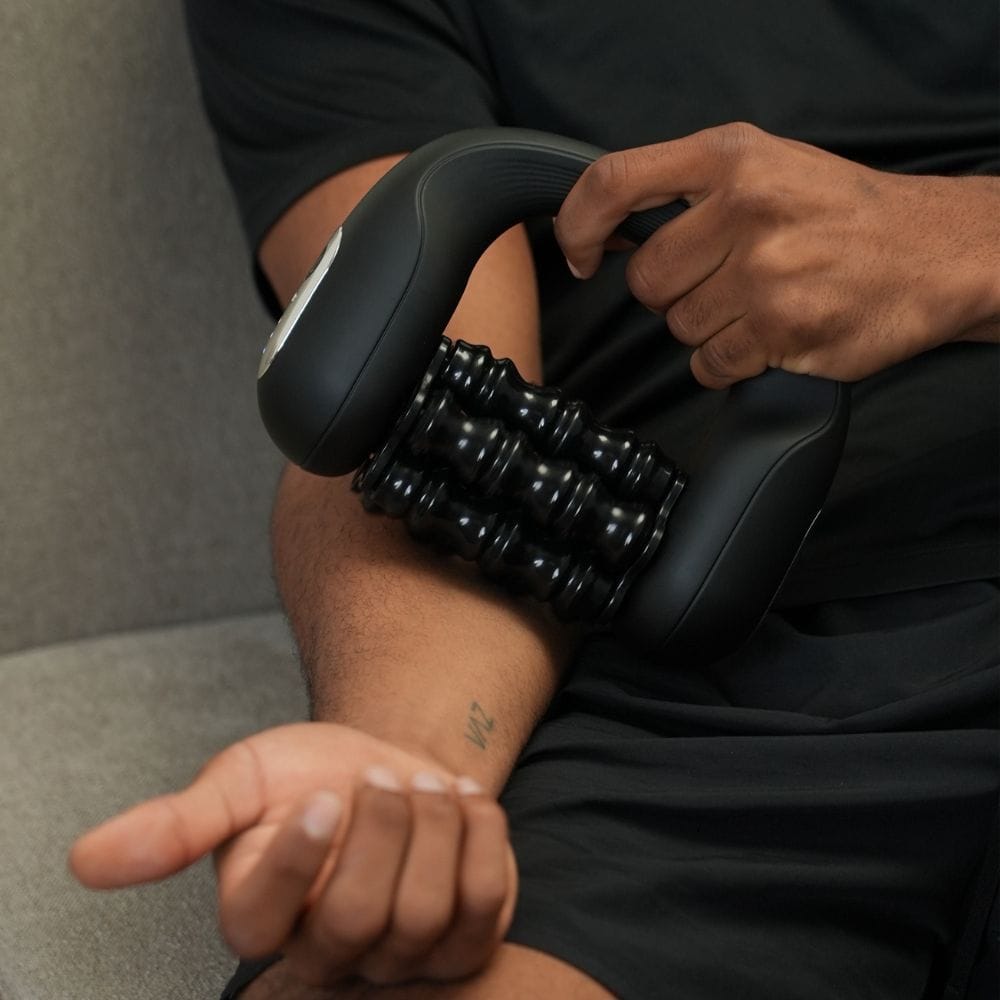
Foam rolling and massage can reduce the sensation of stiffness and soreness by increasing blood flow to the treated area. A foam roller requires you to lie on the floor and use your own body weight as pressure, which can be hard to dose, especially on areas like the neck, shoulders, and upper back. An electric massageroller like JAAFITs works with rotation and pulsation and can be used standing, sitting, and targeted at specific points with adjustable intensity. The difference is not that one is better than the other, but that an electric massageroller gives more control over where and how hard you treat.
Recovery after strength training generally requires more time than after lighter loading. The more muscle mass involved and the higher the load, the longer the recovery time.
Can you train with sore muscles
Yes, in most cases. Mild to moderate soreness is not a reason to skip a workout. Movement actually aids recovery, and many find that the soreness decreases during the warm-up.
But there is a limit. If the soreness limits your range of motion, affects your technique, or feels like more than just muscle soreness (sharp pain, swelling, joint pain), you should wait or choose a different muscle group. Training the same sore muscle group with high load two days in a row is rarely productive.
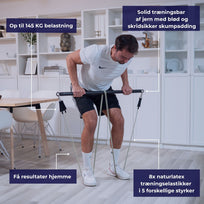
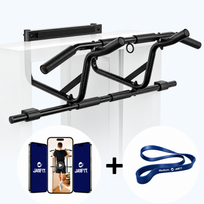
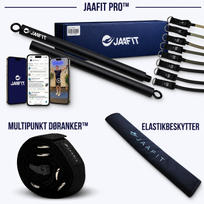
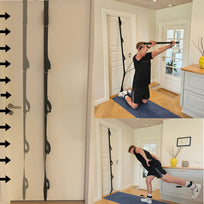
A practical approach is to switch focus. If the upper body is sore, you can train legs. If everything is sore, light band training with low resistance can work as active recovery. JAAFIT PRO makes it easy to adjust the resistance down to a level that moves the muscles without further loading them.
Overtraining is something different from soreness. Soreness is local and temporary. Overtraining is systemic and shows up as persistent fatigue, declining performance, sleep problems, and lack of motivation over weeks. If you experience that pattern, the answer is not better recovery but lower overall load.
Soreness is part of training, not an obstacle to it. It disappears as the body adapts to the load, and it can be managed without necessarily slowing your routine. If you often feel tired and without energy for your training, it may be about more than soreness.


Leave a comment
This site is protected by hCaptcha and the hCaptcha Privacy Policy and Terms of Service apply.