


You have trained, finished, and come home. Maybe you eat something quickly, maybe some time passes, or maybe it just doesn’t really happen.
For many, what happens after training is a bit random. People know it’s probably a good idea to eat something, but what actually matters is less clear. Some focus a lot on timing and try to hit a specific window, while others don’t think about it at all.
The problem is rarely that people do something completely wrong. It’s more that it becomes too imprecise and too irregular to make a real difference.
It’s rarely that what you eat after training is perfect – it’s often just too little or too random.
What happens in the body after training?
The body is busy repairing and rebuilding after training, and that requires both protein and energy.
When you strength train, muscles are loaded and broken down. That is not a problem in itself – it is actually a prerequisite for the body to become stronger. But it also sets a process in motion where the body tries to repair what has been loaded and make it more resilient next time.
That process needs something to work with. If the body doesn’t receive protein and energy, the repair is limited, and it affects how much you get out of your training over time.
The body doesn’t start because you eat – it’s already started. The question is whether you give it what it needs.
Here is where it goes wrong after training
For many, it’s not about doing something completely wrong, but doing too little relative to what the body actually needs.
Some don’t eat at all after training, either because they’re not hungry or because too much time passes before they get something. Others wait until it fits into the rest of the day, thereby missing the opportunity to support the process the body is already in.
There are also those who eat “light” – maybe a small snack or something quick – but without getting enough protein or energy to make a difference. And then there is the idea that one good meal after training can make up for the rest of the day, even though the total intake is still too low.
What should you actually eat after training?
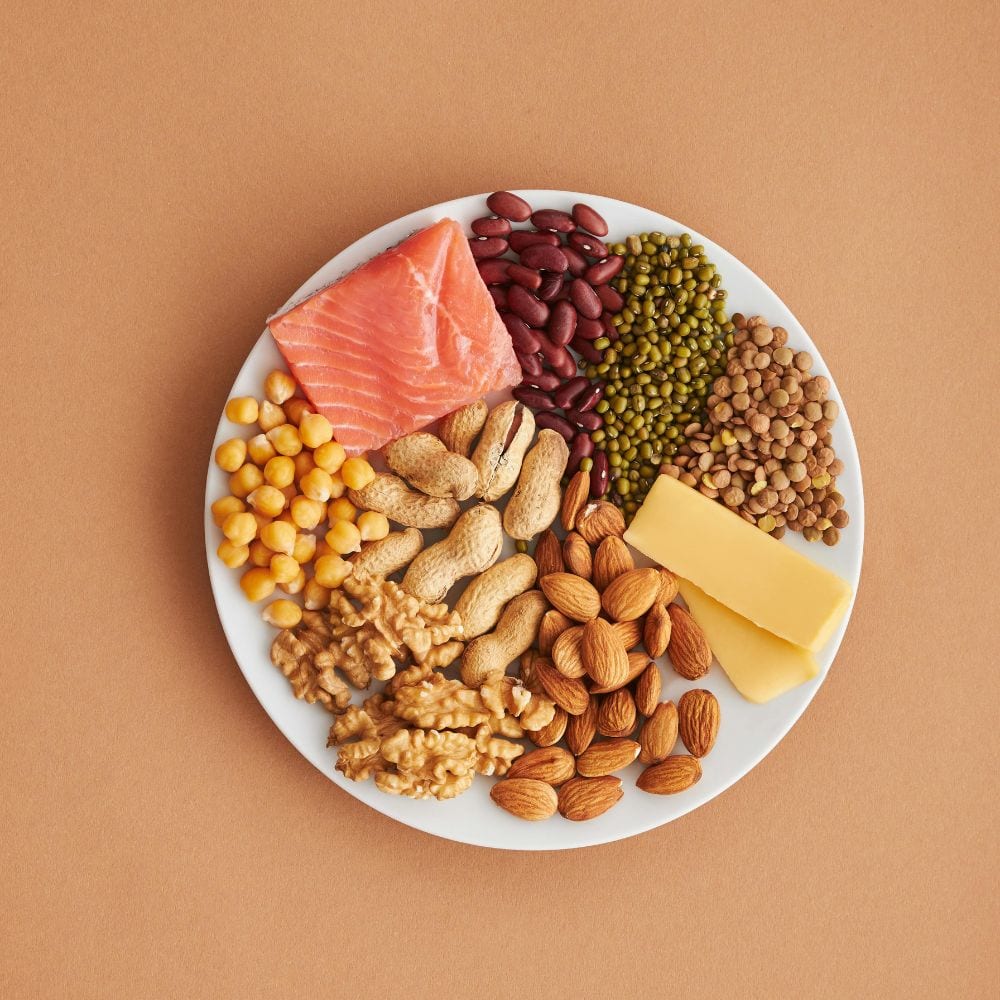
When talking about food after training, it often gets more complicated than it needs to be. In practice, it’s about giving the body a combination of protein and energy so it has something to work with in the process it’s already undergoing.
For some, it can be as simple as coming home and having a bowl of skyr with some fruit. For others it makes more sense to eat a proper meal, like eggs on bread or chicken with rice, if the training is close to a main meal. It depends on the time of day and what fits into your everyday life.
The most important thing is not that the meal is “optimized,” but that it actually gets eaten and that it contains something the body can use. Many make it unnecessarily difficult by searching for the perfect meal, and end up doing nothing instead.
How important is protein after training?
Protein after training plays a role because the body is repairing and building muscle, but it’s only part of the overall picture.
What matters most is how much protein you get over the whole day. If your total intake is too low, it doesn’t make much difference whether you hit a meal right after training. Conversely, a steady and sufficient protein intake will do far more for your development than perfect timing.
Protein after training helps – but it doesn’t save a day with too little protein.
If you’re unsure how much protein you actually need during the day, you can get a concrete answer in our review of how much protein you need for strength training.
Should you eat immediately after training?
There is often a lot of focus on whether you should eat immediately after training, and whether there is a specific time window where it “counts most.”
In practice it’s more nuanced. There is a window where the body is particularly receptive to nutrients, but it’s much wider than many think. It’s not a question of minutes, but rather hours.
For most people it’s therefore not about hitting an exact time, but about avoiding leaving it too long. If many hours pass before you eat something, you lose part of the effect because the body lacks what it needs during the period when it’s trying to recover.
It’s better to eat a little late than not at all.
The most important thing is still that you get enough overall during the day, and that it’s done consistently – not that you hit a specific time perfectly every time.
What does it mean in practice?
This is where it often becomes decisive whether it actually works in everyday life.
If you train at home, it can be as simple as having something ready you can eat immediately. It doesn’t need to be elaborate – the important thing is that it’s easy to access so you don’t end up postponing it or skipping it.
If you train late in the day, a simple meal that doesn’t feel heavy but still gives the body something to work with often makes more sense. It can be enough to support recovery without making it inconvenient.
And in a busy everyday life it’s often an advantage to have some kind of fallback. Something you know you can take when there isn’t time or energy to think about it. It’s rarely the perfect choice, but it’s the stability that makes the difference over time.
It’s also here that structure becomes more important than knowledge. Most people know what they should do – the challenge is to get it done consistently. If you need a way to make it work in practice, you can take a look at JAAFIT the training app, where both training and nutrition are set within a fixed framework that’s easy to follow.
How does it tie into your overall diet?
What you eat after training plays a role, but it can’t stand alone.
If the rest of your diet doesn’t support what you do, one meal won’t make much difference. Conversely, an average meal after training can work fine if you otherwise get enough protein and energy during the day.
It’s the whole that determines whether the body has what it needs to develop.
If you want a better overview of how diet and training fit together as a whole, you can read our review of diet and nutrition for strength training. What you eat before training also plays a role. You can read specifically about that in our article on what you should eat before training.
What you eat after training matters – but what you eat the rest of the day matters more.
When it needs to work over time
It’s rarely one good decision that makes the difference. It’s the repetitions.
If it only works the days when you have surplus and time, it becomes hard to create progress. That’s why it makes sense to think in habits and frameworks rather than single choices.
When both training and diet align in a way that is realistic to repeat, it becomes much easier to stick with over time. It doesn’t have to be perfect – it just needs to be stable.
If you want to make it easier for yourself to maintain that structure, you can take a look at our solutions at JAAFIT, where both equipment and training programs are built to work in a busy everyday life without compromising quality.
That’s why it’s not just about timing
It’s easy to focus on details like timing and specific meals because they feel concrete and controllable.
But in practice that’s rarely what determines your results.
It’s more about whether you give the body what it needs – again and again – and whether it’s something you can stick with over time.
The most important thing is not whether you do it right once, but whether you do something that is good enough every time.



Leave a comment
This site is protected by hCaptcha and the hCaptcha Privacy Policy and Terms of Service apply.